
We will pay more for sovereign tools, but we will not accept less
Sovereign tools are wanted almost everywhere, and they lose the moment they do less. This is what I take from running my own tools and from a conversation with a friend who runs an agency.
Everyone wants the homegrown solution, until the day it does less than the other one.
Talk of sovereignty has been everywhere since the latest trade tensions between Canada and the United States. COVID had already shown what happens when a country stops making things for itself and the global supply chain breaks down. The argument for sovereign capacity is easy to make, and I agree with it.
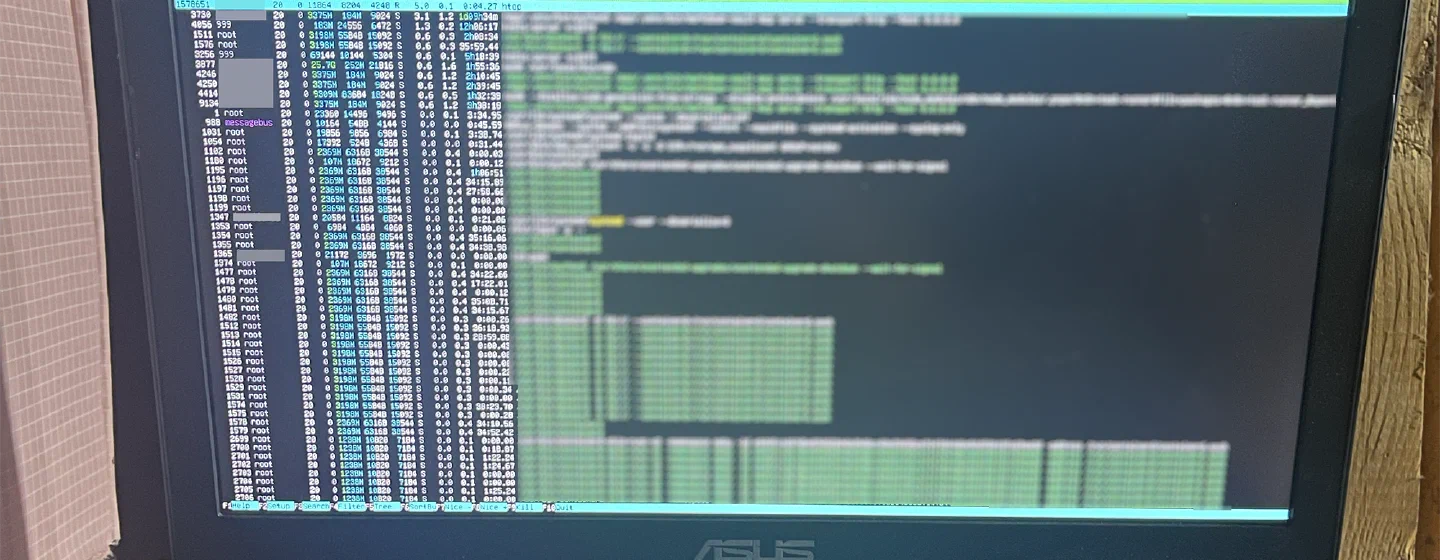
I also act on it. My files have run on Nextcloud for over a year, on an old laptop that sits on a shelf between bare wall studs. In the last few months I moved my invoicing, CRM and automations onto it as well, with Invoice Ninja, Twenty and n8n. I did it because I want more control over my data and my tools.
The question worth asking
The useful question is not why we need sovereign capacity. That case has been made many times, and few people argue against it. The useful question is what makes us abandon sovereign solutions once we have them in front of us.
A friend who runs an agency recently told me what I already suspected. People usually say they want something Canadian. Then they compare, and when the sovereign tool cannot do what the other one does, they do not care enough to stay with it. The preference is sincere, and it still loses.
Price bends, capability does not
Price and capability do not behave the same way in that comparison. Some of us will accept paying a bit more for a local product when we can afford it. We will usually not accept getting less.
I think the reason is where each cost lands. A higher price is paid once a month by whoever holds the budget, and it can be defended as a choice. A missing capability is paid every day by the person doing the work, in workarounds, exports and steps done by hand. That person did not choose sovereignty and has a deadline.
So the sovereign option can survive a price gap, and it rarely survives a capability gap. If the features do not match what the user expects, the user goes back to the other tool, with or without permission.
I have seen this many times. When the approved tool gets in the way, people go around the rules to do the work the way they believe it is best done. They may be a bit careless, but they are trying to do their job well, and the tool is what stands between them and that.
Where sovereignty does win
The only places where I have seen the opposite are large enterprises and government, where control over data is a requirement. There, the requirement removes the non-sovereign option before anyone compares features. A less capable tool gets chosen because the criterion is not negotiable.
That choice has a cost, and the people who use the tool every day carry it. It is accepted because the alternative is not allowed, which is different from being preferred.
This is why I do not read these sectors as proof that sovereignty sells. They show that a requirement sells. Take the requirement away and I expect the same people would compare features like everyone else.
What it costs me
My own setup is the exception that fits the rule. I chose it, I maintain it, and when something breaks I am the one who fixes it. I accept that because control over my data matters to me.
Most businesses would not make that trade, and I do not think they should have to. A sovereign tool that only works for people willing to run a server on an old laptop is a hobby and not yet an alternative.
What this asks of the people who build
If sovereignty only decides between equals, then a sovereign product has to become an equal first. That is a product problem before it is a policy problem.
My take is that we need to solve problems better. We do not have to solve all of them. A small team cannot match a large platform feature for feature, but it can pick one problem, solve it better than the alternative, and then move on to the next.
In that order, sovereignty becomes the reason to choose between two good tools, and it stops being the excuse for a weaker one.
Where I may be wrong
There is a serious case against this reading. The public and enterprise buyers who accept a lesser tool today are also the first customers that let a sovereign product mature. Without them, the product might never reach the point where it can win on features.
It is also possible that I underestimate how much people will give up. I have one conversation, my own habits and what I have seen on mandates, and that is not a study.
What I do believe is that the capability gap can be closed one problem at a time. If you are building a sovereign alternative and want it to compete on user experience, I would like to hear from you. Let’s see how we can work together.
About the author
Louis-Philippe Bellerose
Founder and Principal Consultant